


Key takeaways
- Match seat and table height to learner stature using the EN 1729 size marks; Size 2 (violet) fits roughly 108-121cm tall children, Size 5 (green) fits 146-176cm.
- South Africa needed about 2.3 million school tables and chairs across 10,669 schools in the 2024/25 financial year, so plan orders early and specify durable builds.
- Buy by colour-coded size band rather than a single desk height, since one classroom often spans two or three size marks.
- Flexible, stackable and cluster-friendly furniture extends the life of a purchase as teaching methods change.
- Consolidate orders, confirm lead times and ask suppliers for tender-ready documentation before committing to a bulk purchase.
Buy school furniture by learner height, durability rating and delivery reliability, in that order. Those three decisions shape comfort, how long the furniture lasts and whether it arrives before term starts. Get them right and a single purchase serves a classroom for years; get them wrong and the furniture needs replacing within a season, which few school budgets can absorb twice.
Classroom furniture is a long-term asset bought under budget pressure. A desk chosen well sits a child comfortably through a decade of use; a desk chosen badly slouches posture, wobbles within a term, or simply never fits the pupils in that room. The sections below are built as a buyer's checklist you can work through before you request a quote.
Why Getting School Furniture Right Matters
Demand for school furniture in South Africa is substantial, which makes early, well-specified ordering a practical necessity rather than a luxury. In the 2024/25 financial year, the national backlog stood at roughly 2.3 million tables and chairs across 10,669 schools, averaging about 215 units per affected school, with only around 742,000 units delivered in the first three quarters (The Citizen, 2025).
That gap between what is needed and what arrives on time has a direct lesson for any buyer: specify carefully, order early, and choose furniture built to outlast the budget cycle. A desk replaced every few years costs far more over a decade than a sturdier unit bought once. Durability, correct sizing and a dependable supplier are the three levers that keep total cost down.
Poorly fitted furniture also carries a quieter cost. When seat height, seat depth and desk height do not match the child, pupils perch, slump or dangle their feet, and that posture strain is a recognised contributor to back and neck complaints among schoolchildren. Sizing is covered next, because it is the decision most often rushed.
Matching Desk and Chair Sizes to Student Age Groups
Match furniture to learner height, not age, using a recognised size system. The widely used EN 1729 standard defines eight colour-coded size marks, each tied to a stature range and a fixed seat and table height (European Committee for Standardization, 2015). Buying by size band removes the guesswork of ordering one generic desk for a whole school.
The core sizes most South African classrooms draw on are:
- Size 1 (orange): 260mm seat, 460mm table, for children about 93-116cm tall
- Size 2 (violet): 310mm seat, 530mm table, for about 108-121cm
- Size 3 (yellow): 350mm seat, 590mm table, for about 119-142cm
- Size 4 (red): 380mm seat, 640mm table, for about 133-159cm
- Size 5 (green): 430mm seat, 710mm table, for about 146-176cm
- Size 6 (blue): 460mm seat, 760mm table, for about 159-188cm
The standard allows small tolerances, around 10mm on seat height and 20mm on table height, so slight variation between suppliers is normal.
How to size a real classroom
A single grade rarely fits one size mark. In a typical primary class, pupils can span two bands, and a Grade R room may need Size 1 and Size 2 together. Before ordering, measure a sample of learners standing against a wall and group them by stature. Order roughly to that spread rather than buying a single height across the room.
When the standard advice fails
Two situations break the simple rule. A combined or multi-grade classroom, common in smaller rural schools, holds a wide height range at once; here, height-adjustable desks or a deliberate mix of two size marks work better than a single fixed height. Specialist rooms are the other exception: a technical drawing or art room needs taller draughtsman chairs and raised worktops, not standard seating, so size those by task rather than by pupil age.
For adults who also spend long hours seated, the same fit-first logic applies. Our guide to an ergonomic home office setup that protects your back covers the posture principles that carry across from classroom to desk.
Durability and Safety Standards to Look For
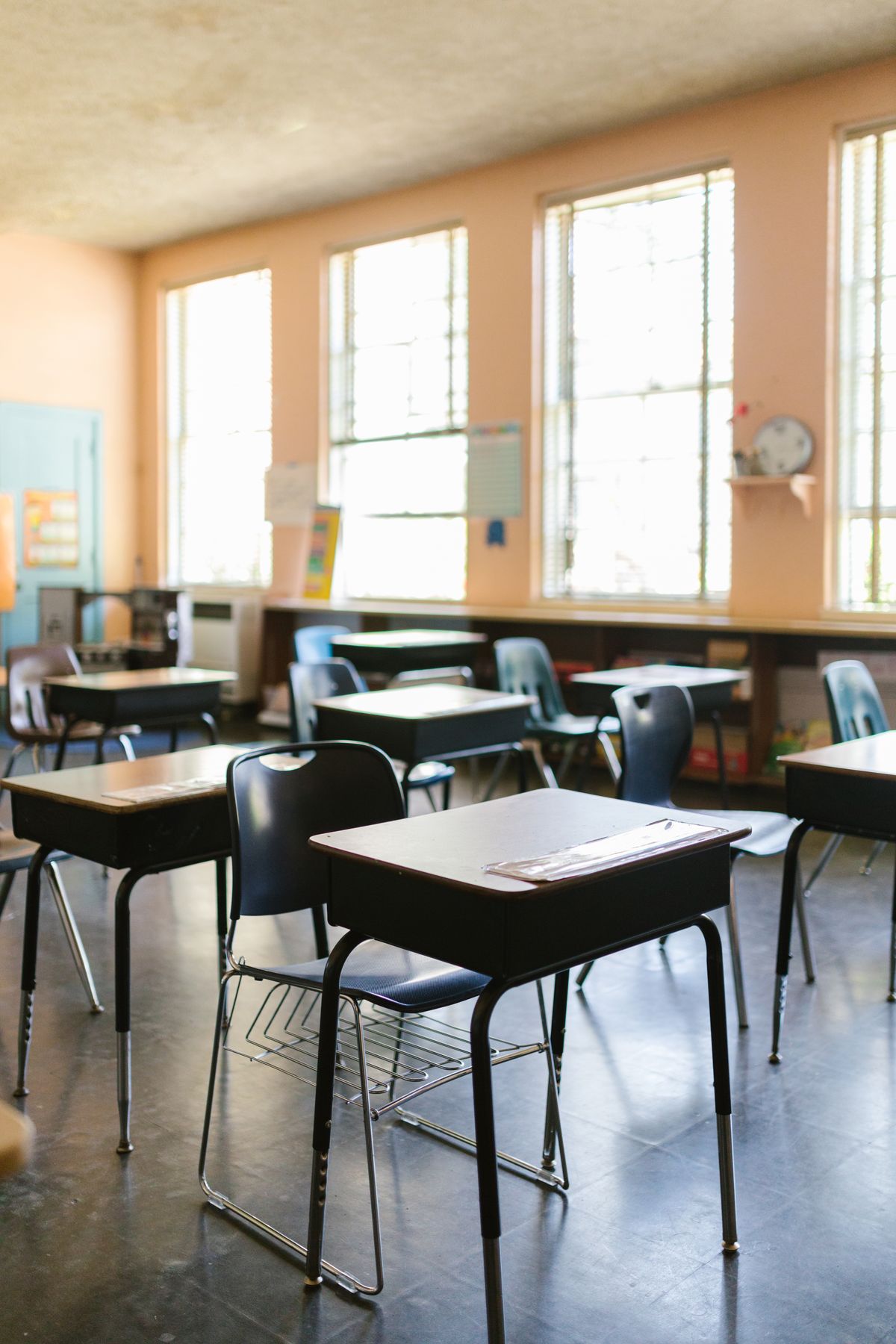
Prioritise frame strength, edge safety and finish quality, because classroom furniture takes daily abuse that home or office furniture never sees. The same EN 1729 family that defines sizing also sets strength and stability requirements for educational chairs and tables, so a supplier who can cite that standard is a reasonable starting filter. Ask for the specification in writing before a large order.
A practical durability checklist for school furniture:
- Welded or heavy-gauge steel frames rather than thin tube, since steel resists the knocks of a busy classroom and is repairable
- Impact-resistant laminate or sealed hardwood tops that shrug off scratches and spills
- Chairs that pass a stability test and will not tip when a child leans back
- Rounded corners and smooth edges with no exposed bolt ends
- Pinch-free mechanisms on any folding or stacking furniture
- Non-toxic, low-odour finishes suitable for enclosed rooms
Steel versus timber
Steel-framed desks with laminate tops are the common workhorse in South African schools: they take punishment, resist wobble and can be re-welded rather than discarded. All-timber furniture feels warmer and suits some early-learning and library settings, but it marks and loosens faster under heavy use. For storage and lockers, steel is almost always the right call, both for strength and for security.
Checking stability yourself
You do not need a lab to spot weak furniture. Rock a sample chair on two legs, press down on a front table corner to check for lean, and open and close any folding leg a dozen times. A unit that flexes, creaks or shifts in a showroom will fail faster in a classroom of thirty children.
Flexible Layouts: Rows, Clusters and Collaborative Setups
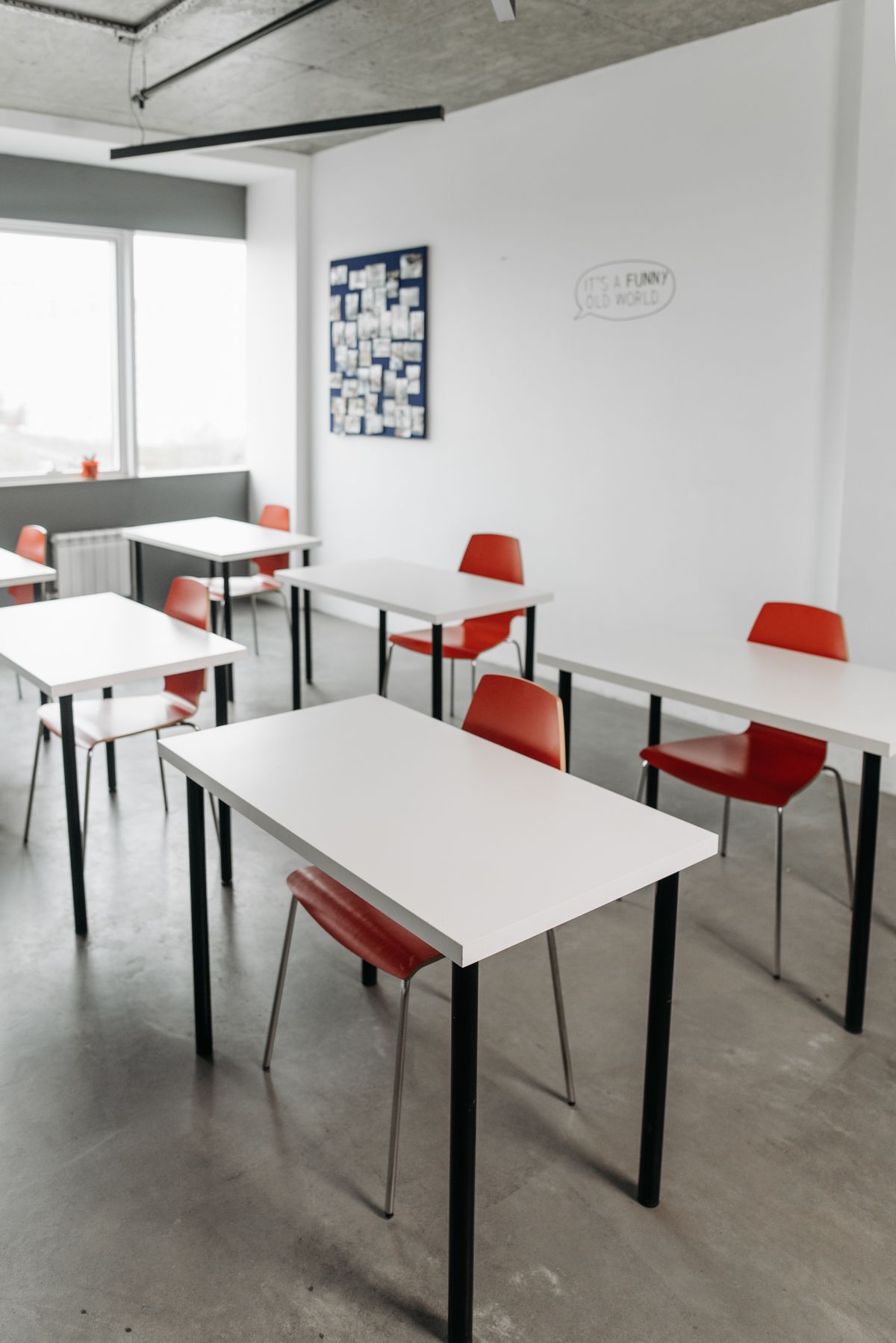
Choose furniture that supports more than one layout, because teaching methods shift and a rigid fit-out dates quickly. Lightweight single desks and stackable chairs let a teacher move between rows for exams, clusters for group work and a horseshoe for discussion within minutes. Fixed, bolted-down bench seating locks a room into one style and limits how the space can be used.
Three common layouts and what each needs:
- Rows: individual single desks that line up cleanly; best for focused written work and assessments
- Clusters: trapezoidal or square tables that push together into islands of four to six; best for group projects
- Collaborative or horseshoe: light tables and stacker chairs that reconfigure fast and clear the floor when needed
Furniture that earns its keep
Stackable chairs and nesting or folding tables are the quiet heroes of a flexible room. They store compactly, free the hall for assemblies and events, and let one set of furniture serve several purposes. Stacker chairs in particular suit multipurpose rooms, dining areas and halls where the floor needs to clear often.
Specifying furniture that moves also future-proofs the spend. A room bought as fixed rows cannot become a group-work space without a second purchase; a room bought as light, movable units adapts for free. For procurement teams weighing a ten-year horizon, that flexibility is part of the value, not an extra.
Storage and Teacher Furniture Essentials
Budget for storage and teacher furniture from the start, not as an afterthought, because a classroom without proper storage ends up cluttered and harder to teach in. Beyond pupil desks, a working classroom needs a place for books, equipment, cleaning supplies and the teacher's own workspace. Steel cupboards and lockers handle the bulk of this, offering security and longevity that open shelving cannot.
Core storage and teacher items for a standard classroom:
- A lockable steel cupboard for textbooks, stationery and valuables
- Open shelving or trolleys for daily-use materials and reading corners
- A teacher's desk sized for marking, a laptop and a document tray
- A comfortable teacher's chair, since staff sit for long stretches
- Pupil storage: lockers, tote trays or under-desk space for bags and books
- A presentation surface such as a whiteboard or notice board at the front
Matching storage to the room
A reading-heavy primary room needs low, open shelving children can reach; a high school science room needs lockable steel cupboards for equipment and chemicals. For shared or specialist spaces, tote-tray units let each class keep its materials separate. Office Stock Group supplies steel cupboards, lockers, shelving and presentation boards alongside classroom seating, which lets a school source desks, storage and boards together rather than juggling several suppliers.
The teacher's own setup
The teacher spends the whole day in the room, so the teacher's chair matters as much as the pupils'. A supportive chair reduces fatigue over a long teaching day. The same ergonomic thinking that applies to office seating applies here: our guide to mesh office chairs in South Africa is a useful reference for choosing a durable, breathable chair for staff.
Budgeting and Bulk Ordering Tips for Schools
Plan the order around enrolment, size spread and lead time, then consolidate to get the best bulk price. National demand runs into the millions of units, which means popular lines can carry long lead times and stock can move quickly. Confirm availability and delivery dates before you commit, especially if the furniture must be in place for the start of term.
A procurement checklist for a bulk school order:
- Count current enrolment and add a 5-10% buffer for growth and breakages
- Break the order into size bands rather than ordering one height for all
- Group desks, chairs, storage and boards into a single order for a better rate
- Ask for written lead times and a delivery schedule in advance
- Request compliance and warranty documentation for the tender file
- Confirm delivery and installation coverage for your province
Reading a quote properly
The sticker price is only part of the cost. Weigh the per-unit price against the expected lifespan, the warranty, and whether delivery and installation are included or billed separately. A cheaper desk that lasts three years is dearer over a decade than a sturdier one that lasts ten. For large institutional purchases, ask the supplier to break out furniture, delivery and installation as separate lines so the real total is clear.
Tenders and funding timing
Public-sector furniture buying is tied to budget cycles and tender processes, and infrastructure funding pressure is a recurring theme in the sector (South African Government, 2025). Prepare tender-ready documentation, align the order with your financial year, and start the process early so delivery lead times do not collide with the start of a term.
Fitting Out Special Spaces: Halls, Labs and Reception
Specialist rooms need furniture specified by task, not by the general classroom rule. A school hall needs stacker chairs that store flat and clear the floor for assemblies; a laboratory needs chemical-resistant tops and taller stools; a reception or waiting area needs durable seating that handles constant public use. Treating each space on its own terms avoids buying classroom desks for a job they cannot do.
Practical pointers for non-standard spaces:
- Halls and multipurpose rooms: lightweight stacker chairs and folding or nesting tables that store compactly
- Science and technical rooms: raised worktops, draughtsman chairs and wipe-clean, chemical-resistant surfaces
- Libraries: low shelving, soft seating and sturdy reading tables
- Reception and public areas: hardwearing seating built for heavy, continuous use
- Staff rooms and offices: standard office desks and supportive chairs
Buying these alongside the main classroom order, from a supplier that carries hospitality, reception and office ranges as well as school lines, keeps the whole fit-out on one delivery and one point of contact.
Making the Furniture Last: Maintenance and Replacement
Extend furniture life with simple, scheduled maintenance, because the cheapest desk is the one you do not have to replace. A light termly check catches loose bolts, worn glides and early frame fatigue before they turn into breakages. Steel-framed furniture in particular rewards upkeep: a re-tightened joint or a re-welded leg returns a unit to service for a fraction of replacement cost.
A basic maintenance routine:
- Tighten bolts and fixings once a term
- Replace worn chair glides and feet to protect floors and stop wobble
- Clean laminate tops with non-abrasive products to preserve the finish
- Flag damaged units for repair early rather than leaving them in use
- Keep a small stock of spares for high-wear items
Buying furniture that can be repaired rather than only replaced is a procurement decision made at purchase. Ask whether spare parts and replacement components are available for the range before committing. Furniture designed as a sealed, non-repairable unit forces a full replacement at the first serious fault.
Planning Accessible and Inclusive Classroom Seating
Specify a share of adjustable and accessible furniture, because a standard-size fit-out leaves some learners poorly served. Every classroom holds pupils who sit outside the average height band or who use a wheelchair, and furniture bought only to the mean excludes them. Planning for a spread of needs at purchase is far cheaper than retrofitting a single specialist desk later.
Practical steps for inclusive seating:
- Order a small proportion of height-adjustable desks that span two size bands
- Include wheelchair-accessible tables with sufficient knee clearance and no front rail
- Choose chairs with optional footrests for shorter learners whose feet do not reach the floor
- Keep aisles and cluster spacing wide enough for mobility aids to pass
- Position at least one adjustable workstation per room rather than one per school
Why one size never fits all
A desk fixed at the class average forces taller pupils to hunch and shorter pupils to perch with dangling feet. Adjustable units absorb that variation across a single room. For a multi-grade class or a group with a wide height spread, a handful of adjustable desks does more good than a larger batch of a single fixed height.
Accessibility is also a specification question to raise with the supplier early. Ask whether the range includes adjustable and wheelchair-accessible options before you commit to a line, since adding them to an existing order is usually simpler than sourcing them separately after delivery.
Delivery, Installation and Countrywide Logistics
Confirm delivery, assembly and installation terms in writing before you order, because a low unit price means little if the furniture arrives late, flat-packed and unassembled, or not at all. For schools outside the main metros, delivery reach and lead time are often the deciding factor between suppliers. Treat logistics as part of the specification, not an afterthought at checkout.
Questions to settle before committing to a bulk order:
- Does the quoted price include delivery to your site, or is it billed separately by distance?
- Is furniture delivered assembled, or does the school assemble it on arrival?
- Who handles installation and the removal of packaging and old furniture?
- What is the realistic lead time to your province, not the best case?
- Is there a single contact for the order from placement to installation?
Why assembly matters more than it looks
A delivery of flat-packed desks that a small staff must assemble can tie up days before term. Fully assembled delivery costs more per unit but saves labour and avoids units built incorrectly. For a large order, ask the supplier to assemble and place the furniture in each room, and to take the packaging away. A supplier offering project support from planning through installation removes that burden entirely.
Reaching schools outside the metros
Rural and smaller-town schools often face the longest waits because fewer suppliers deliver that far. Confirm countrywide delivery coverage explicitly rather than assuming it. Office Stock Group delivers nationwide and supports projects from planning to installation, which matters when a school sits well away from a major centre and cannot easily collect or self-assemble a bulk order.
A Simple Buying Checklist Before You Request a Quote
Work through fit, durability, flexibility, storage and delivery before contacting a supplier, so your quote request is specific and the response is accurate. A vague enquiry produces a vague price; a clear brief produces a usable quote. Pulling the earlier sections together, the questions below cover the decisions that matter most for a school furniture order.
Before you request a quote, confirm:
- Learner height spread and the size bands you need, measured from a real sample
- The durability and safety specification you require in writing
- Which layouts the room must support, and whether furniture needs to move or stack
- Storage, teacher furniture and presentation boards for each room
- Total quantity with a growth buffer, grouped by size
- Required delivery date, installation needs and province
- Warranty, spare-parts availability and tender documentation
With those answers ready, a supplier can quote accurately on the first pass and flag any lead-time risks before they affect the start of term.
Conclusion
Your first action is a tape measure, not a catalogue. Measure a sample of your learners this week, group them by the EN 1729 size bands, and count the quantity you need in each band. With that spread, a target delivery date and your durability specification in hand, you can brief a supplier precisely and avoid the costly cycle of furniture that does not fit or does not last.
Office Stock Group supplies classroom desks and chairs, steel storage, presentation boards and specialist seating across South Africa, with project support from planning to installation and tender-ready bulk ordering. When your checklist is complete, request a quote for the size bands and quantities your classrooms need, and confirm lead times early so the furniture is in place when term begins.
Frequently asked questions
What size desks and chairs do primary school children need?
Match furniture to learner height using the EN 1729 size marks, not age alone. Size 2 (violet) suits children about 108-121cm tall with a 310mm seat height, while Size 3 (yellow) suits 119-142cm with a 350mm seat. Measure a sample of pupils before ordering.
How many classroom desks and chairs should a school order at once?
Order to your enrolment plus a 5-10% buffer for growth and breakages, grouped by size band. Bulk ordering lowers the per-unit cost and simplifies delivery, but confirm lead times first, as national demand has run into millions of units.
What safety standards should school furniture meet?
Look for compliance with recognised school furniture standards such as EN 1729 for dimensions and strength, stable non-tip frames, rounded edges, pinch-free folding mechanisms and non-toxic finishes. Ask the supplier for test certificates before a large order.
Is steel or wood better for classroom furniture?
Steel frames with laminate tops resist knocks and last well in high-traffic classrooms, while all-timber desks feel warmer but mark more easily. Many South African schools choose steel-framed desks with hardwearing tops as a durable, repairable compromise.