


Key takeaways
- Spend first on the chair and desk you use daily; save on storage, shelving and accessories you can upgrade later.
- A supportive mesh or basic ergonomic chair with seat-height and tilt adjustment beats a cheap fixed chair that gets replaced within a year.
- Full-time remote workers can save $2,000 to $6,500 a year on commuting and related costs, which frees budget for a proper desk and chair (Global Workplace Analytics).
- Multi-use and space-saving pieces, like a compact desk with built-in drawers, cut both cost and clutter in small rooms.
- Measure your room before buying; the wrong-sized desk is the most common and most expensive home office mistake.
Put your money in the chair and the desk first, then save on everything else. Those two pieces carry your whole working day, so they are where budget home office furniture either works hard for years or gets replaced within months. Storage, shelving, lighting and accessories can wait, be bought second-hand, or be added one piece at a time as your budget allows.
This guide shows you where to spend, where to save, and which smart buys hold up. We sell office, home and steel furniture across South Africa, so the advice here is built on what customers actually keep and what they return. You will find practical figures, space-planning tips and a clear order of priority, written for someone ready to buy rather than someone still deciding whether to work from home.
Why budget home office furniture is worth getting right
A home office is now a permanent fixture for millions of workers, not a temporary desk in the corner. Remote and hybrid work has settled into normal working life, which means the furniture you choose gets used every weekday, often for eight hours or more.
The money saved by working from home is real, and it helps justify spending properly on the few pieces that matter. Full-time remote workers can save between $2,000 and $6,500 a year on commuting, fuel, parking and related costs (Global Workplace Analytics). Remote work also returns the equivalent of two to three extra working weeks of time each year that was once lost to commuting. A slice of that saving, spent once on a good chair and desk, pays you back in comfort every day.

The trap with a tight budget is buying everything at the cheapest price. A fixed, unsupportive chair or a wobbly desk saves money on day one and costs you in aches, poor focus and early replacement. Smart budgeting spreads your money by priority, not evenly across the list.
Which pieces to spend on first
Spend first on the pieces your body touches all day: the chair, then the desk. Everything else is secondary. If you only have money for two good items, make them these two, and let storage and extras follow later.
Here is a simple order of priority for a budget setup:
- The chair. You sit in it for hours. Support, adjustability and durability matter most here.
- The desk. A stable surface at the right height protects your posture and holds your kit.
- Lighting. A decent desk lamp reduces eye strain and costs very little.
- Storage. A drawer unit or small cupboard keeps clutter down. Upgrade later.
- Accessories. Monitor risers, footrests, cable management and boards come last.
Treat the first two as fixed investments and the rest as flexible. You can start with a single pedestal drawer and add a steel cupboard when the budget recovers. You cannot comfortably start with a bad chair and fix your back later.
A useful test: ask how many hours a week each item is in direct use. The chair and desk score highest, so they earn the largest share of the budget.
Affordable chairs that still perform
A basic ergonomic or mesh chair with seat-height and tilt adjustment is the smartest budget buy in any home office. It costs more than a fixed plastic chair but far less than a top executive model, and it supports you through a full day without the aches a cheap chair causes.
Look for these features at the affordable end of the range:
- Seat-height adjustment (gas lift) so your feet rest flat and your knees sit level with your hips.
- A tilt or recline mechanism so you can shift position through the day rather than sitting rigid.
- A breathable mesh back that supports your spine and stays cool in warm rooms.
- A stable five-star base on castors rated for everyday use.
A mesh chair suits most home offices because it is light, comfortable and easy to live with. For a closer look at which models hold up, see our guide to mesh office chairs in South Africa. Before you buy, it also helps to understand what the levers under the seat do, so you know to look for a gas-lift height adjuster and a working tilt rather than a fixed seat.
Avoid the cheapest fixed chairs for daily work. They have no height adjustment, no real back support, and the padding flattens fast. A chair you replace within a year is more expensive than a mid-range chair you keep for five.
Affordable desks that do the job
A simple, stable desk of around 1000mm to 1200mm wide suits most home offices and costs a fraction of a large executive desk. The surface needs to be solid, the right height, and big enough for a screen, keyboard and a little working space. Size and stability matter more than price or finish.
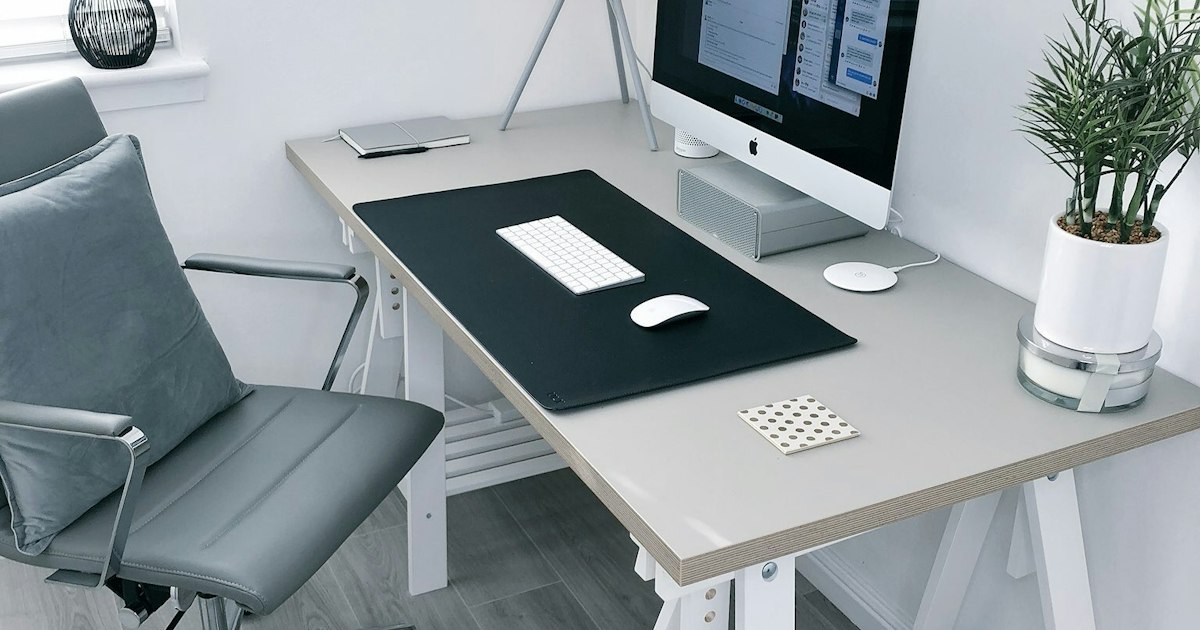
When choosing a budget desk, check the following:
- Width. 1000mm to 1200mm fits a single screen and keyboard with room to write. Go wider only if the room allows.
- Depth. At least 600mm so your monitor sits an arm's length away and your eyes are not too close.
- Height. A standard 720mm to 750mm desk height suits most people seated. Pair it with a height-adjustable chair to fine-tune your fit.
- Build. Look for a melamine or laminate top on a steel or sturdy board frame. These resist scratches and last.
A desk with a built-in drawer or small pedestal saves you buying storage separately, which is a genuine budget win. If you are weighing a fixed desk against a standing option, our comparison of a standing desk versus a sitting desk covers the trade-offs in cost and comfort.
Avoid very small desks under 800mm wide for full-time work. They force a cramped posture and leave no room for paperwork. A slightly larger desk is cheap insurance against daily frustration.
Getting your chair and desk to fit together
The right desk height and chair setup matter more than the price on either item. A well-fitted cheap pair outperforms an expensive mismatched one. Spend a few minutes getting the relationship right once you have both pieces home.
Aim for this basic position:
- Feet flat on the floor, knees at roughly a right angle.
- Elbows at about a right angle when your hands rest on the keyboard.
- The top of your screen at or just below eye level.
- A hand's width of space between the back of your knee and the seat edge.
If your feet dangle, a low footrest or even a sturdy box fixes it for almost nothing. If the screen sits too low, a monitor riser or a ream of paper lifts it. These small, cheap adjustments turn a budget setup into a comfortable one. For the detail on sizing a chair to your body, our guide to office chair seat height and depth explains how to find your fit.
Getting this relationship right is the single highest-value thing you can do, and it costs nothing beyond a little time.
Multi-use and space-saving furniture ideas
Multi-use furniture cuts both cost and clutter, which makes it ideal for a small or shared home office. One piece that does two jobs saves you buying two, and it keeps a compact room from feeling crowded. This is where clever budgeting beats simply buying cheap.
Practical space-saving choices include:
- A desk with built-in drawers, so you skip a separate storage unit.
- A mobile pedestal on castors that tucks under the desk and rolls out when needed.
- A slim steel cupboard or locker that stores files and supplies in a narrow footprint.
- A corner desk that uses an awkward corner and frees up wall space.
- Open shelving above the desk rather than a bulky floor cabinet.
Steel storage deserves a mention because it is hard-wearing and often cheaper over time than flimsy board units. A single steel cupboard holds files, stationery and equipment, locks for security, and lasts for years. In a shared space, a lockable unit also keeps work items separate from the household.
Think vertically in small rooms. A tall, narrow shelf or cupboard stores as much as a wide low one while taking up far less floor. The floor you save is the room you get back.
Where to save and where it pays to invest
Invest in the chair and desk; save on storage, decor and accessories. This split keeps you comfortable where it counts and flexible everywhere else. The pieces that affect your body and your working day justify spending; the rest can be cheap, second-hand, or added later.
Here is a clear split for a budget setup:
Worth investing in:
- The chair. Daily support and durability repay the cost many times over.
- The desk. Stability and the right size protect your posture and your kit.
Safe to save on:
- Storage, at least at first. Start with one drawer unit and add later.
- Lighting, where an affordable desk lamp does the job well.
- Accessories, such as monitor risers, boards and organisers.
- Decor, where a plant and tidy cabling cost little but lift the whole room.
The logic is simple. A chair or desk failure interrupts your work and your health, so those pieces earn the spend. A basic lamp or a second-hand shelf works fine and can be upgraded whenever you choose. Spreading money by impact, not evenly, is what separates a smart budget from a cheap one. For the full picture on building a setup that protects your posture, see our ergonomic home office setup guide.
Buying smart: new, bulk and project options
How you buy matters as much as what you buy. Measuring first, comparing online and ordering sensibly all stretch a tight budget further. A few habits save real money and spare you the cost of returns.
Before you order, do this:
- Measure the room and the doorway. The wrong-sized desk is the most common and most expensive home office mistake. Check it fits the space and gets through the door.
- Compare products online side by side on price, size and features rather than buying the first result.
- Plan the whole room at once, even if you buy in stages, so pieces match and nothing is wasted.
- Check delivery terms. Lead times and delivery charges vary by product, so confirm them before you commit. We deliver countrywide, and our offices are in Centurion; we do not have a showroom.
If you are furnishing more than one desk, for a small team or a growing business, buying a matched set in one order is usually cheaper and tidier than piecing it together. We help with bulk and project orders, from a single room to a full office, including a formal quotation and dependable delivery.
A quick note on budgets and pricing: always check whether a price includes or excludes VAT, and confirm stock and delivery before you count on a date. Clear expectations up front save surprises later.
Buying second-hand and ex-demo without regret
Second-hand and ex-demonstration furniture can stretch a budget a long way, as long as you check the right things. A used steel cupboard or a solid desk often has years of life left, and refurbished chairs can be sound. The risk sits in buying worn parts you cannot see, so a short inspection saves you from a false bargain.
When you look at a used or ex-demo piece, check the following:
- The chair gas lift. Sit, lift and lower. If the seat sinks under your weight or will not hold height, the gas cylinder is worn and needs replacing.
- The castors and base. A cracked five-star base is a safety risk. Roll the chair and watch for a wheel that drags or sticks.
- The desk frame and top. Press on the surface and rock the legs. Flex or wobble means a tired frame. Chips in a melamine top will spread.
- Drawer runners. Open and close every drawer fully. Sticky or dropping runners are hard to fix cheaply.
- Steel units. Look for rust at the base and check that doors and locks line up and close.
Ex-demo furniture, sold once used for display, often carries a lower price with little real wear. It is worth asking whether a retailer has ex-demo or clearance stock before paying full price. Match any second-hand chair against the same comfort checklist you would use for a new one, because a cheap chair that fails your back is no saving at all.
One caution: avoid used upholstered chairs where the foam has flattened or the fabric is stained, since reupholstering usually costs more than the chair is worth. Hard-wearing mesh and steel are the safer second-hand bets.
A sample budget: how to split your spend
A clear split helps you decide how far your money goes before you shop. There is no single right figure, because prices vary and VAT may be included or excluded, so treat the shares below as a guide to priority rather than fixed amounts. The point is proportion: most of your budget belongs in the chair and desk.
A sensible split for a single home office looks like this:
- Chair: roughly 35 to 40 percent. Your single most-used item earns the largest share. Aim for an adjustable mesh or basic ergonomic model.
- Desk: roughly 30 percent. A stable, correctly sized surface, ideally with a built-in drawer to save on storage.
- Storage: roughly 15 percent. Start with one pedestal or a slim steel cupboard and add later.
- Lighting and accessories: roughly 10 percent. A good desk lamp, a monitor riser and cable management.
- Decor and extras: roughly 5 percent. A plant, a pinboard, and anything that tidies the room.
If your budget is very tight, collapse the list to two lines: chair and desk. Buy those well, work from them, and add the rest over the following months as funds allow. Staging the purchase this way protects the pieces that matter and spreads the cost without leaving you uncomfortable in the meantime. Keep a short list of what is still to come, so stationery, a second screen or extra storage get added in the right order rather than all at once.
Common budget mistakes to avoid
The most expensive home office mistakes are usually cheap decisions made in a hurry. Buying the wrong size, skimping on the chair, or forgetting delivery terms all cost more than they save. Knowing the common traps lets you sidestep them before you order.
Watch out for these:
- Buying before measuring. A desk that does not fit the room or the doorway is the costliest error. Measure twice, order once.
- Choosing a chair on price alone. A fixed chair with no adjustment is a short-term buy. It flattens, offers no support, and gets replaced.
- Overbuying storage up front. Large cabinets eat floor space and budget. Start small and add only what you fill.
- Ignoring desk depth. A shallow desk forces your screen too close. Depth matters as much as width for comfort.
- Forgetting the setup cost. Delivery charges and lead times vary by product. Confirm them so the final figure holds no surprises.
- Matching nothing. A room of mismatched bargains looks cluttered. A little consistency costs nothing and lifts the whole space.
The thread through all of these is haste. A budget setup rewards a little planning: a tape measure, a quick comparison online, and a clear order of priority. Spend ten minutes before you spend your money, and the cheap setup becomes a smart one.
Setting up a stylish home office for less
A stylish home office on a budget comes from consistency and tidiness, not from expensive furniture. Matching finishes, clean cabling and a little greenery make a modest setup look considered. Style here is mostly free; it is about restraint, not spend.
Try these low-cost touches:
- Match your finishes. Choose one wood tone or a white theme and stick to it across desk, storage and shelves. A consistent look reads as planned.
- Tidy the cables. A simple cable tray or clips under the desk removes the single biggest source of visual clutter.
- Add one plant. A single plant softens a workspace and costs very little.
- Light it well. A warm desk lamp improves both the look and your comfort for a small outlay.
- Keep the surface clear. An uncluttered desk looks smarter than any accessory you could buy.
The goal is a room that feels calm and deliberate. That impression comes from how pieces sit together, not from how much each one cost. A neutral chair, a simple desk and a clear surface will always look better than a jumble of mismatched bargains.
Start with the two pieces that carry your day, the chair and the desk, then build the rest at your own pace. When you are ready, browse our home office range or send us your room measurements and a short brief, and our team will help you choose, quote and deliver a setup that fits your space and your budget.
Frequently asked questions
What should I buy first for a budget home office?
Buy the chair and desk first. You sit in the chair for hours, so a supportive adjustable chair and a stable desk at the right height protect your comfort. Storage, lighting and accessories can wait or be added gradually.
Is a cheap office chair worth it?
A very cheap fixed chair is usually a false economy because it offers no support and often needs replacing within a year. A basic mesh chair with seat-height and tilt adjustment costs a little more but lasts longer and supports your back through a full working day.
How much space do I need for a home office desk?
Measure the wall and floor area before buying. A compact desk of around 1000mm to 1200mm wide suits most small rooms, with at least 600mm of depth for a screen and keyboard. Leave room to pull your chair back and stand up comfortably.
Can I set up a stylish home office cheaply?
Yes. Choose a simple desk and a neutral chair, keep cabling tidy, add a plant and good lighting, and match finishes like oak or white across pieces. A consistent, uncluttered look costs little and reads as considered rather than cheap.