


Key takeaways
- Durability in school furniture comes from the frame material and finish first: welded steel tubing with a powder-coat finish resists the daily knocks of a busy classroom far better than bolted or painted frames.
- Size furniture by pupil height, not age. The EN 1729 standard sets seat heights from 260 mm to 460 mm and table heights from 460 mm to 760 mm across six size grades.
- Stackable, easy-to-move designs cut storage space and let one room serve several purposes, which matters when classrooms double as exam venues or assembly spaces.
- Planned maintenance roughly doubles useful life. One benchmark puts school furniture at about 12 years with planned upkeep against 5 to 7 years with reactive-only repairs.
Durable school desks are built from a welded steel frame, a powder-coat finish and a hard-wearing worktop, then sized to the pupils who use them. Get those three things right and a desk will shrug off years of knocks, spills and daily stacking. This guide walks through what actually makes classroom furniture last, how to size desks and chairs correctly, and how to keep both going for longer.
Buying for a classroom is different from buying for a quiet office. Thirty children use the same desk every day, chairs are dragged rather than lifted, and the whole room may be cleared and reset several times a week. Furniture that looks fine in a showroom can loosen, chip or wobble within a term if it was not built for that load. Below we cover the parts that matter: frame materials and finishes, stackable designs, ergonomic sizing, and the maintenance habits that stretch the life of every piece.
Why Durability Matters in a Busy Classroom
A classroom is one of the harder environments any furniture faces. Chairs are tipped back, desks are leant on, bags are hung on frames and the whole set is cleaned with water and detergent daily. Multiply that by a full class and a full school year, and small weaknesses turn into breakages fast.
The cost of getting it wrong is not only the replacement price. A wobbly desk or a chair with a cracked shell is a distraction and, in some cases, a safety risk. Replacing furniture mid-year also means disruption: ordering, delivery, assembly and disposal all land during term time.
There is a clear financial case for durability too. A facilities maintenance benchmark puts the average school furniture lifespan at around 12 years with planned maintenance, against 5 to 7 years in reactive-only environments. The furniture you buy and how you look after it together decide whether you are replacing desks once a decade or twice.
For South African schools and training centres working to a fixed budget, that gap is the whole argument. Spending a little more on a better frame, and setting up a simple maintenance routine, usually costs less over ten years than repeatedly buying the cheapest option.
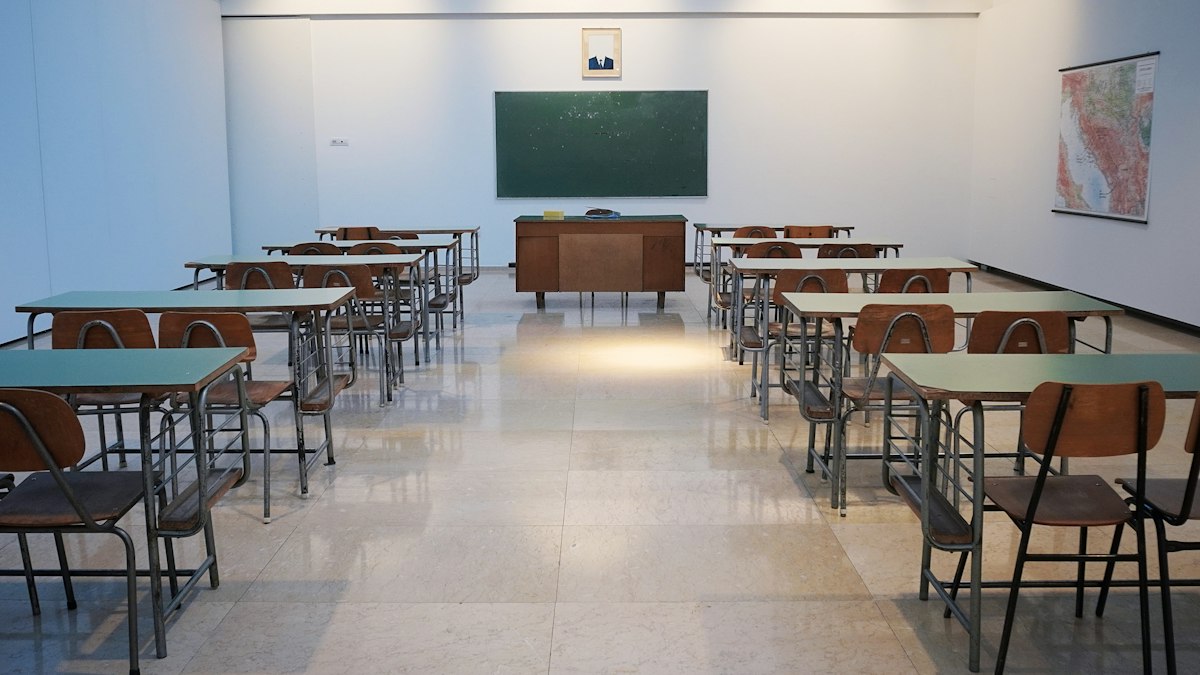
Frame Materials and Finishes That Withstand Wear
The frame is the single biggest factor in how long a desk or chair lasts. It carries the load, takes the knocks and holds everything square. Here is how the common options compare.
Steel frames
Steel is the workhorse of classroom furniture. A frame made from welded steel tubing is stiff, heavy enough to feel solid and able to take years of dragging and stacking. The key word is welded. Welded joints stay tight where bolted joints can work loose over time and need re-tightening.
When you inspect a steel frame, look at the welds themselves. Clean, even welds with no gaps or rough spatter suggest careful manufacturing. Thicker-gauge tubing resists bending, which matters for the back legs of chairs that children lean back on.
Powder-coat finishes
A frame is only as durable as its finish. Powder coating is applied as a dry powder and then baked, which produces a harder, more even surface than liquid paint. It resists chips, scratches and rust far better, which is why quality metal furniture with a good powder-coat finish often carries long warranties and can stay in service for well over a decade.
Painted frames, by contrast, chip at the feet and edges, and once bare metal is exposed it starts to rust, especially in humid coastal classrooms. If a quote does not say powder-coated, ask.
Worktops and seat shells
The surfaces take a different kind of wear: pens, spills, elbows and the occasional craft knife. Common choices include:
- Laminated board (MFC or HPL): A board core with a tough laminate surface. High-pressure laminate (HPL) is the harder-wearing of the two and resists scratches and moisture better. Check that edges are sealed or edge-banded, because a chipped edge lets water into the core.
- High-density polyethylene (HDPE) and polypropylene (PP) shells: Moulded plastic seats and tops are light, easy to clean and will not splinter. HDPE is the tougher of the two and copes better with sunlight and daily flexing; PP is lighter and cheaper but can grow brittle sooner if it is in strong sun every day.
- Plywood seats: Moulded plywood is comfortable and durable when the laminate is intact, but keep an eye on the edges where the layers can lift if they get wet repeatedly.
A sensible classroom spec is usually welded steel plus powder coat plus a laminated or HDPE surface. That combination balances cost, weight and lifespan for the typical school budget.
Stackable and Easy-to-Move Designs
Space is tight in most schools, and rooms rarely do only one job. A hall becomes an exam venue, a classroom hosts an after-school club, and furniture gets moved constantly. Stackable and movable designs make that practical.
What to look for in a stackable chair
Stacking saves floor space and makes cleaning quicker, but a poorly made stacker scratches itself to pieces. Good ones share a few features:
- Stacking guides or glides that let chairs nest without metal rubbing on metal.
- A consistent stack height so a tower of ten does not become unstable.
- Floor glides rather than bare tube ends, which protect both the chair and the floor when chairs are dragged.
A stackable chair is not automatically weaker than a fixed one. The best use the same welded frame and moulded shell; the only difference is the shape that lets them nest. Check the welds and the glides and you will usually get the same lifespan.
Desks that move and reconfigure
For flexible rooms, consider desks with the following:
- Castors with brakes so a desk rolls into place and then locks. The right wheel depends on your floor, with softer wheels for hard floors and harder wheels for carpet.
- Folding or nesting frames that collapse flat for storage.
- Trapezoidal or modular tops that push together into group clusters, then separate for exams.
Flexible layouts raise the same questions a shared-desk office does: how quickly a room can be reset, and where furniture goes when it is not in use. Plan the storage before you buy the mobile furniture, not after.
Ergonomic Sizing for Growing Students
A durable desk at the wrong height still fails the pupil using it. Sizing is where many classrooms go wrong, because furniture is often bought in one size for a whole school when children's heights vary enormously.
Size by height, not by age
The European school furniture standard, EN 1729, sets out size grades matched to pupil height rather than age. The recommended seat and table heights run as follows:
| Size grade | Typical age | Seat height | Table height |
|---|---|---|---|
| 1 | 3 to 4 | 260 mm | 460 mm |
| 2 | 4 to 6 | 310 mm | 530 mm |
| 3 | 6 to 8 | 350 mm | 590 mm |
| 4 | 8 to 11 | 380 mm | 640 mm |
| 5 | 11 to 14 | 430 mm | 710 mm |
| 6 | 14 and up | 460 mm | 760 mm |
Age is only a rough guide here. Two children of the same age can be a full size grade apart, so where you can, check against pupil height rather than assuming a year group all needs the same size.
Why the fit matters
When furniture does not fit, children compensate by hunching, perching or dangling their feet. Research on classroom furniture has repeatedly found a poor match between standard sizes and real pupils. One widely cited study reported that desk height was mismatched for 92.5 percent of students and seat height for 98.4 percent, which shows how common one-size buying is and why it is worth sizing more carefully.
A good fit follows a few plain rules:
- Feet rest flat on the floor with knees at roughly a right angle.
- The seat does not press behind the knee.
- The desk sits at about elbow height when the child is seated upright, so there is no need to raise the shoulders or stoop.
The same principles that make an office chair comfortable apply to a classroom chair. If you want the detail behind these numbers, our guide to seat height and depth explains how to find a fit for any user.
Mixed-age and shared rooms
Training centres, church halls and multi-grade classrooms face a harder sizing problem because one room serves several heights. Two practical answers help here:
- Buy two or three size grades and label or colour-code them so staff can set the room up for the group of the day.
- Choose a mid-range size for the most common group and keep a small set of smaller and larger pieces for outliers.
Choosing Classroom Chairs That Take Daily Punishment
Classroom chairs get the hardest life of any item in the room. They are rocked, dragged, stood on and stacked, and the back legs in particular take real strain when pupils lean back. A few checks separate a chair that lasts from one that fails within a year.
- Back-leg strength: Lean-back puts most of a child's weight on two legs. Thicker tubing and a cross-brace near the floor resist the bending that eventually snaps weak frames.
- Shell-to-frame fixing: Where the plastic or plywood shell meets the metal frame is a common failure point. Look for multiple fixing points and rubber bushes that absorb shock rather than letting the shell crack around a single screw.
- Weight rating: Standards for school chairs are written around realistic user loads. EN 1729-2, the safety and strength part of the standard, specifies chairs for users up to a defined weight, so a compliant chair is tested to a sensible margin rather than guessed. Ask whether a chair is tested to a recognised strength standard.
- Edge finish: Rounded, smooth edges on both shell and frame are safer and less likely to chip or catch on clothing.
For computer rooms or staff areas where you choose task chairs with moving parts, remember that the mechanism is another wear point. Simpler chairs with fewer moving parts tend to last longer in heavy shared use.
What Makes Durable School Desks for Shared, Heavy Use
Desks fail in quieter ways than chairs, usually through a loosening frame, a chipped edge or a sagging top. Specifying well at the outset avoids most of it.
- Frame rigidity: A desk should not rack or twist when you push a corner. A welded steel frame with a cross-rail stays square; a lightly built bolted frame loosens with daily knocks.
- Top thickness and edge: A thicker top resists flexing, and a sealed or edge-banded perimeter keeps water out of the core. Bare chipboard edges swell and crumble once they get wet.
- Levelling feet: Adjustable feet let you kill a wobble on an uneven floor, which is common in older buildings, and protect the floor surface.
- Cable and device needs: Computer rooms and modern classrooms often need cable routing or a modesty panel. Decide this before you buy, because retrofitting is awkward.
A simple way to count what a whole room needs before you request pricing is to work room by room, listing desks, chairs and storage with a few spares, rather than ordering a single round number for the school.

Storage and Steel Furniture That Supports the Room
Durable desks and chairs work best alongside storage that matches them for toughness. Classrooms need somewhere for books, equipment and cleaning supplies, and steel is the natural choice for shared, heavy use.
- Steel cupboards and lockers resist knocks and damp better than board units and lock securely for valuables or chemicals. The same powder-coat finish that protects desk frames protects cupboards.
- Open steel shelving suits store rooms and libraries where load and air flow matter more than looks.
- Mobile storage on braked castors can double as a room divider or a trolley for moving equipment between rooms.
Office Stock Group supplies steel cupboards, lockers and shelving alongside classroom furniture, so a single order can cover desks, chairs and storage with finishes that match and a single delivery to arrange.
Matching Finishes and Colour Across a Room
Durability is the priority, but a coherent look helps a room feel cared for, and consistent finishes are easier to maintain and reorder. A few practical points:
- Standardise the frame colour across desks, chairs and storage so future top-up orders blend in. Grey and black frames are the easiest to match years later.
- Choose worktop colours that hide marks. Mid-tone, lightly textured laminates show scuffs and pen marks far less than high-gloss white.
- Keep a note of the exact product codes you bought. When you need to replace a few chairs, matching the original spec keeps the room consistent and the furniture interchangeable.
Maintenance Tips to Extend Furniture Life
Good furniture still needs looking after, and simple upkeep is the cheapest way to add years. Remember the benchmark above: planned maintenance was linked to roughly double the lifespan of reactive-only repairs. A light, regular routine beats occasional big repairs.
A simple termly routine
- Tighten fixings. Once a term, run round desks and chairs and tighten any bolts on tops, feet and glides. Catching a loose joint early stops it wearing oval and failing.
- Check and replace glides and feet. Worn glides let bare metal scratch floors and make chairs unstable. They are cheap and quick to swap.
- Clean with the right products. Warm water and a mild detergent suit laminate and plastic. Avoid harsh solvents on plastic shells, which can cause cracking over time, and dry metal frames to prevent rust at chips.
- Treat chips promptly. A powder-coat chip on a frame exposes bare steel. A dab of touch-up paint keeps rust from creeping under the finish.
Store and move furniture carefully
- Stack to the rated height only. Overstacking strains the lowest chairs and makes towers topple.
- Lift rather than drag where you can, especially on rough floors, to save both feet and flooring.
- Keep furniture out of standing water after cleaning, because board cores and plywood edges suffer most from prolonged damp.
Keep a few spares
For a large school, holding a small stock of matching chairs, glides and fixings means a broken chair is swapped the same day rather than leaving a pupil without a seat. It also smooths out the cost of replacement across the year.
If you are fitting out or refreshing a space, our school furniture buying guide for South African classrooms walks through quantities, layout and budgeting in more detail.
Planning a Classroom Purchase or Refit
Pulling it together, a durable classroom set comes down to a handful of decisions made in order:
- Count by room. List desks, chairs and storage per room, including spares.
- Set the sizes. Match size grades to the pupils, buying more than one grade for mixed groups.
- Fix the spec. Welded steel frames, powder-coat finish, hard-wearing tops, braked castors where you need mobility.
- Plan delivery and setup. Decide who assembles and where furniture is stored before the room is ready.
- Set up maintenance from day one. A termly tighten-and-check routine and a small spares stock.
For institutional and tender orders, buying this way also makes pricing clearer, because a complete, specified list is far easier to quote accurately than a vague request.
A Sensible Next Step
Durable school furniture is a long-term purchase, so it is worth getting the specification and sizing right before you order. Draw up your room-by-room list, settle on the size grades your pupils need, and decide where mobility and storage matter.
When your list is ready, send it to Office Stock Group as a product list or project brief. We have supplied office, school and hospitality furniture across South Africa since 2007, with planning help, bulk and tender-ready ordering and dependable countrywide delivery. Our offices are in Centurion; we do not have a showroom. Compare classroom desks, chairs and steel storage online, or request a quotation for a complete room or whole-school refit.
Frequently asked questions
What makes a school desk durable?
A welded steel frame, a powder-coat finish rather than paint, and a hard-wearing worktop such as laminated board or high-density plastic. The joints and edges matter most, because that is where daily wear shows first.
What height should classroom desks and chairs be?
Match the furniture to pupil height. Under EN 1729, seat heights run from 260 mm for the youngest children to 460 mm for teenagers, with matching table heights from 460 mm to 760 mm.
Are stackable classroom chairs less sturdy?
Not necessarily. A well-made stackable chair uses the same steel frame and moulded shell as a fixed chair. Check the weld quality and look for stacking guides that stop frames rubbing and scratching.
How long should school furniture last?
With planned maintenance, quality steel-framed desks and chairs commonly last well over a decade. One facilities benchmark puts the average at around 12 years with planned upkeep, dropping to 5 to 7 years when repairs are only done reactively.